I stopped walking the first time I saw a painted football parking spot up close. It was outside a school in Ohio, squeezed between a hundred ordinary cars, and it still pulled every eye that passed. Nothing fancy about the paint job. No professional artist involved, just a senior with a plan and one free Saturday. That is the whole secret behind a good football parking spot. It does not have to be complicated. It just has to say something true about the person who painted it.
If you are a senior who genuinely lives for the sport, whether that means Saturday matches with your club team or Sunday nights parked in front of a Premier League game, your parking spot is one of the last blank canvases high school hands you. This guide runs through eleven ideas that have not been done a thousand times already, plus the materials, the beginner tips, and the mistakes worth avoiding before you crack open a can of paint.
Why a Football Parking Spot Is Worth the Effort
A football parking spot is one of those senior year traditions that quietly outlasts almost everything else. Nobody remembers a random Tuesday quiz grade five years down the line, but people remember the spot they painted and the friends who showed up to help, sealant forgotten until the very end.
There is also something satisfying about claiming ownership of a physical space. For one full school year, that rectangle of pavement belongs to you and nobody else. You back into it every morning, glance at it on the way to class, and it becomes part of how people know you, in a way a locker or yearbook photo cannot manage.
It also says something without a word being spoken. Bold colors read as confidence. A clever detail reads as personality. A clean, well-planned football parking spot tells the whole school you cared enough to do it properly, and that impression sticks around for the rest of the year.
11 Football Parking Spot Ideas That Are Actually New
1. Floodlight Stadium Glow
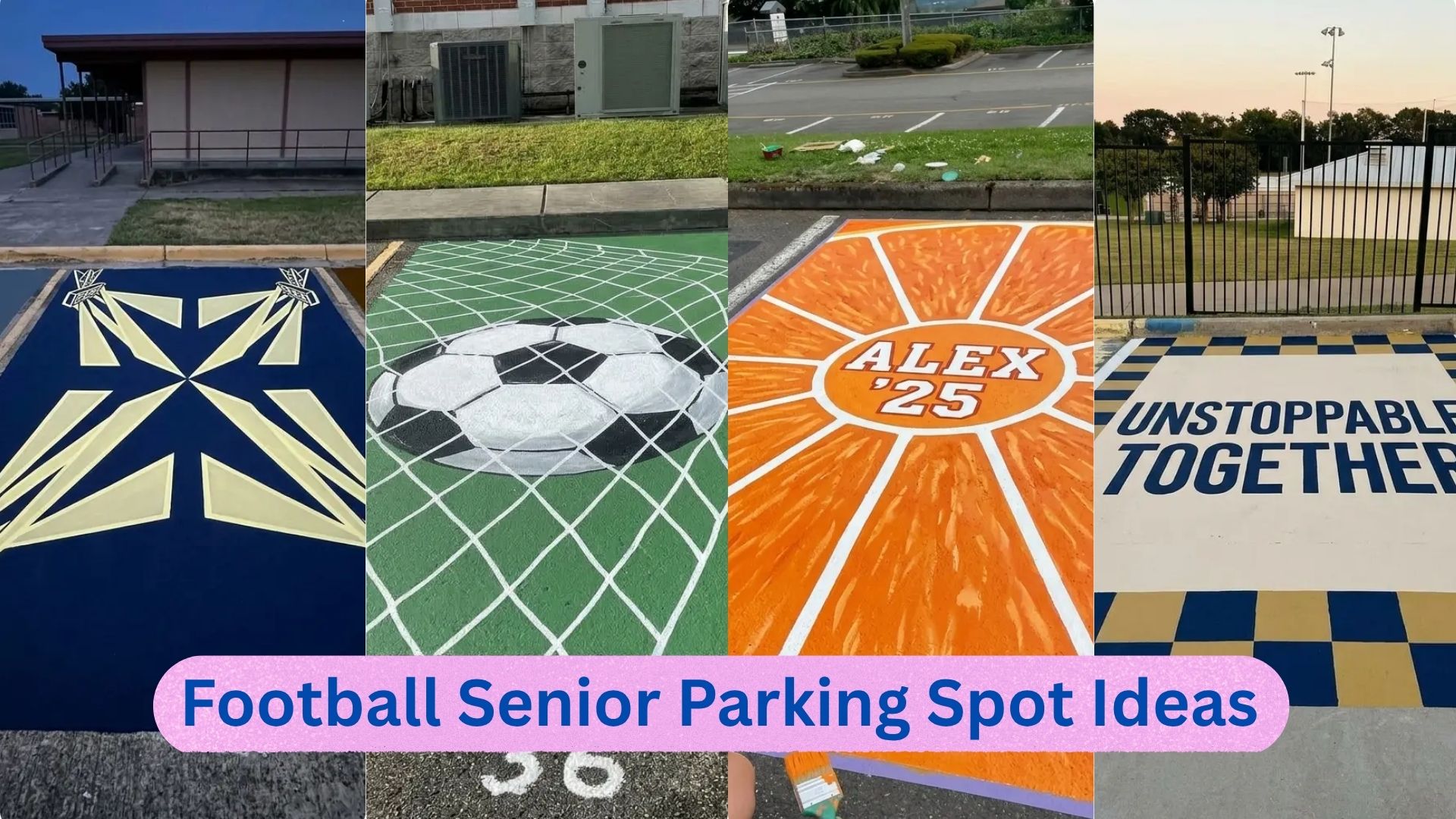
This football parking spot design captures the feeling of a night match under the lights. Paint the background deep navy or near black for the night sky, then add four floodlight towers in the corners, each throwing a beam of white or yellow paint toward the center. From a distance it looks dramatic, even though it is just triangles and rectangles.
Materials needed: black or navy base paint, white and yellow paint, painter’s tape, one wide brush.
Beginner tip: Tape off the triangular beams before you paint them so the edges stay crisp. A floodlight tower that is slightly off still reads as intentional once those beams come out sharp and clean.
2. Red Card Yellow Card Combo
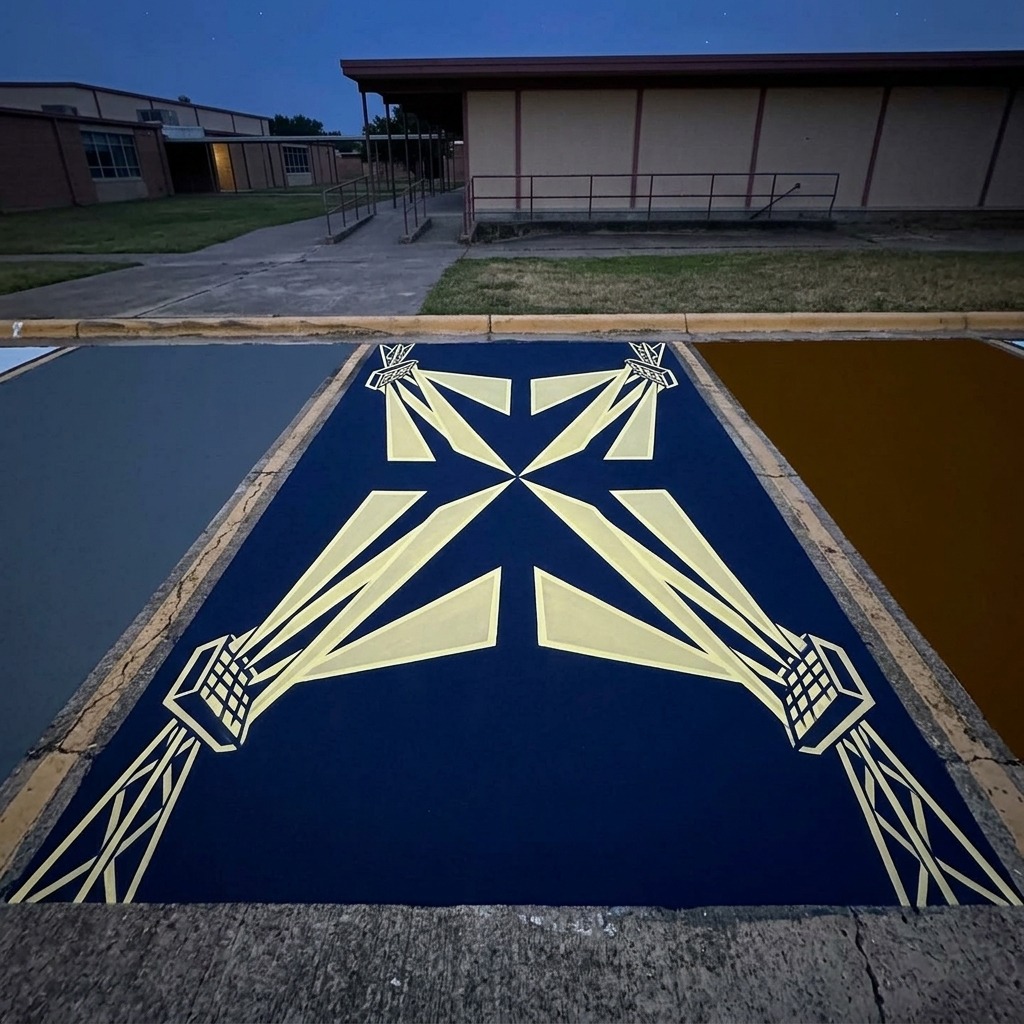
A football parking spot built around the two most dramatic objects in the sport tends to get noticed fast. Paint one half of the space solid yellow and the other half solid red, styled like two oversized referee cards propped side by side, then add your name or graduation year in bold letters where the two colors meet.
Materials needed: red and yellow outdoor paint, black paint for lettering, chalk, painter’s tape.
Beginner tip: Run a strip of tape down the center line first so the two colors meet in one straight, clean seam instead of a messy overlap you will have to fix later.
3. Golden Boot Award
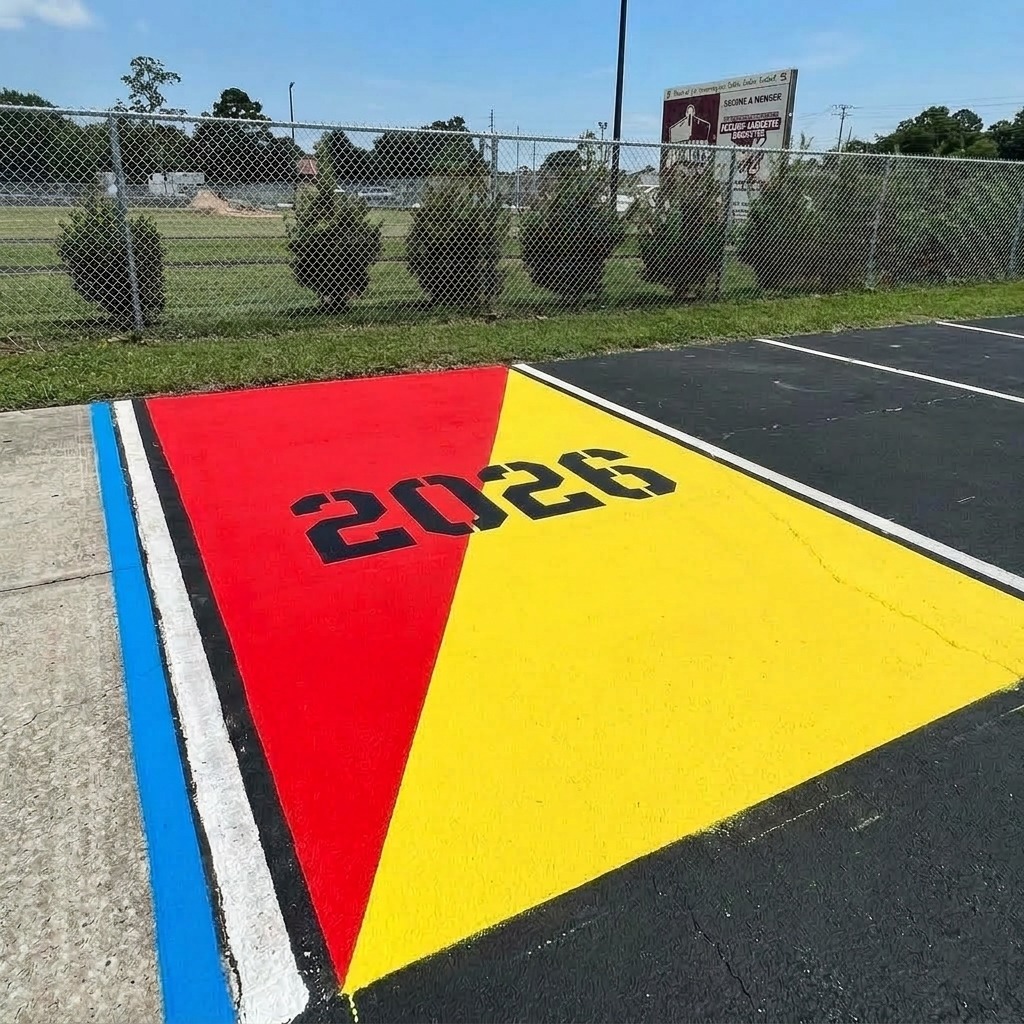
This football parking spot idea celebrates the top scorer trophy without asking for any real artistic ability. Paint a golden boot silhouette in the center of the space, scatter a few small stars around it, and add the words “Top Scorer” or your own name underneath in clean block lettering.
Materials needed: gold and black paint, letter stencils, chalk, one medium brush.
Beginner tip: Trace a boot outline from a printed reference image before you paint so the proportions actually look right, then fill it in with one solid coat of gold rather than trying to squeeze in extra detail nobody will notice anyway.
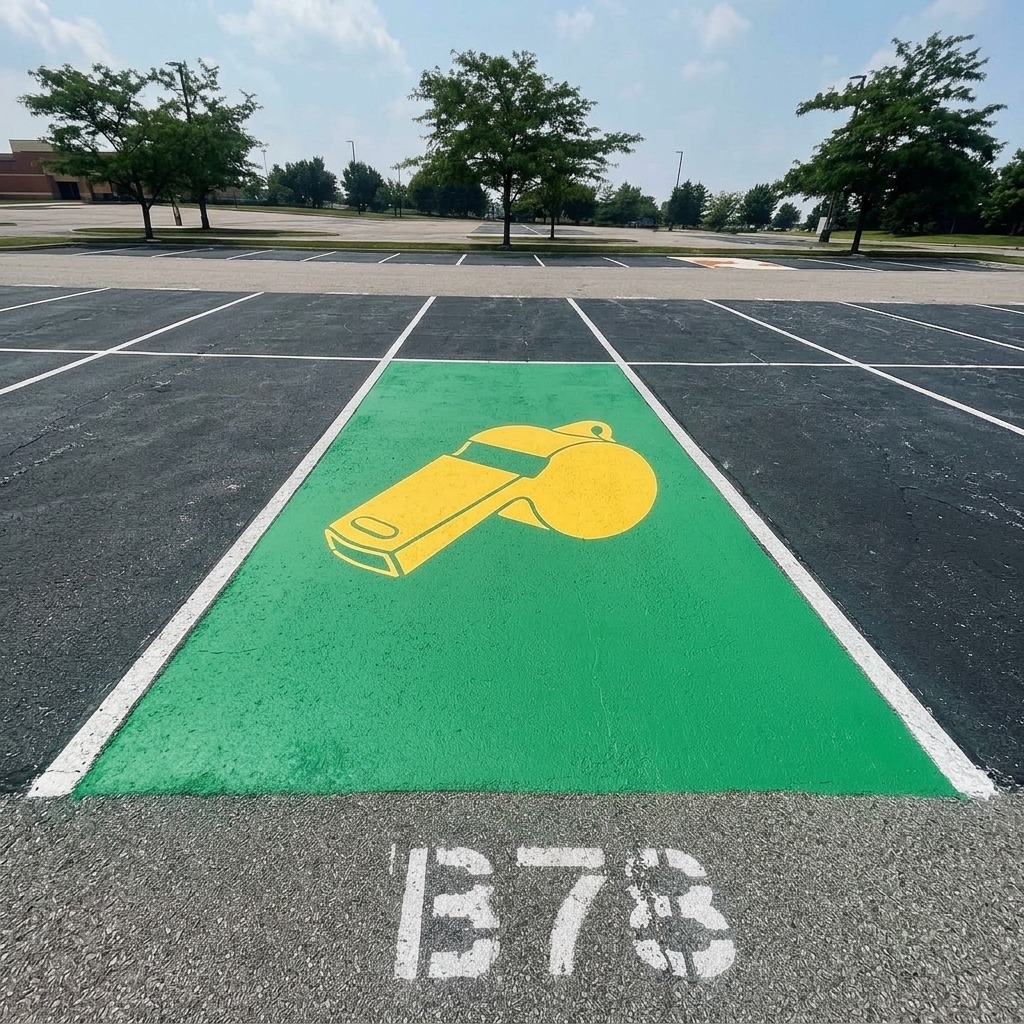
4. Referee Whistle Close-Up
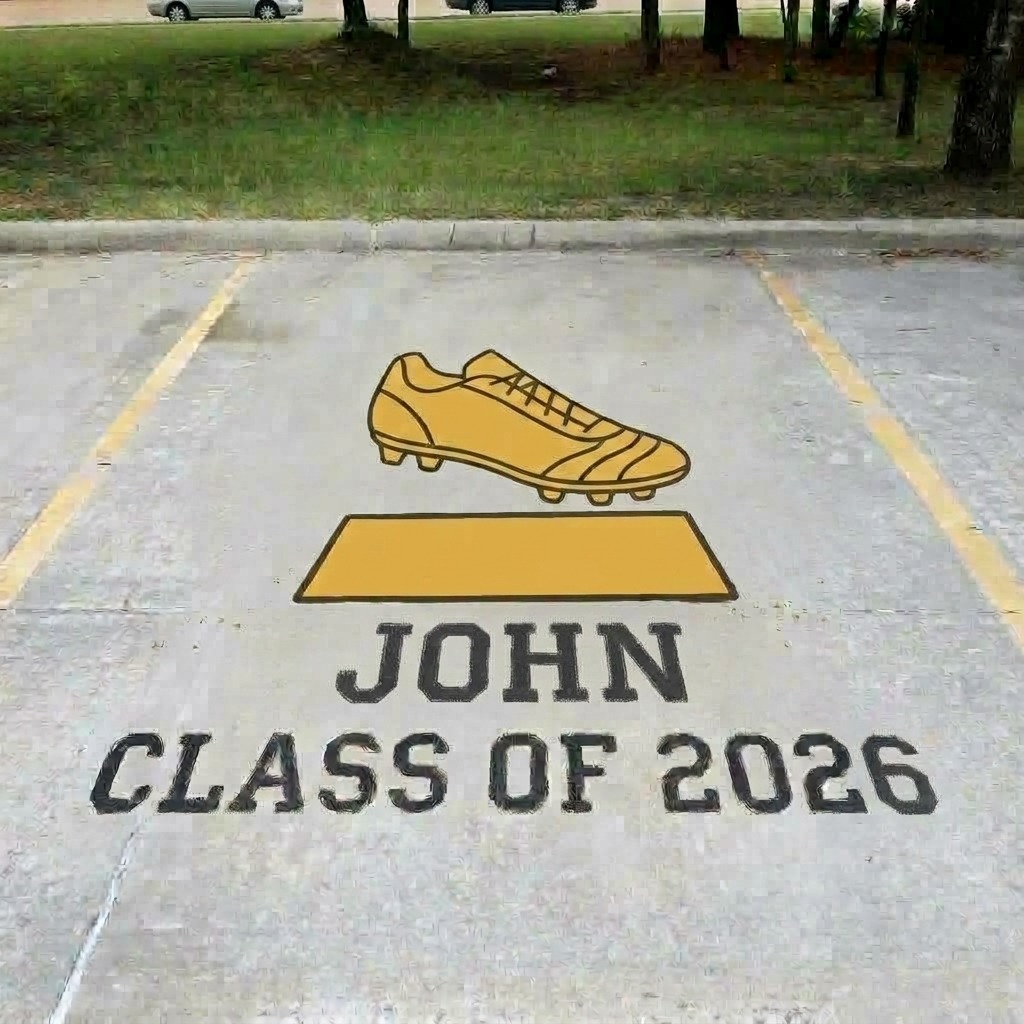
Not every senior design needs a ball or a full pitch scene. This one zooms in on a single oversized whistle painted diagonally across the space, with a short chalk drawn lanyard trailing off one end. It is unexpected, easy to paint, and instantly recognizable.
Materials needed: silver or white paint, black paint, chalk, one medium brush, painter’s tape.
Beginner tip: Break the whistle into two basic shapes, a rounded body and a small side loop, and tape off each section before filling in color.
5. Free Kick Wall Design
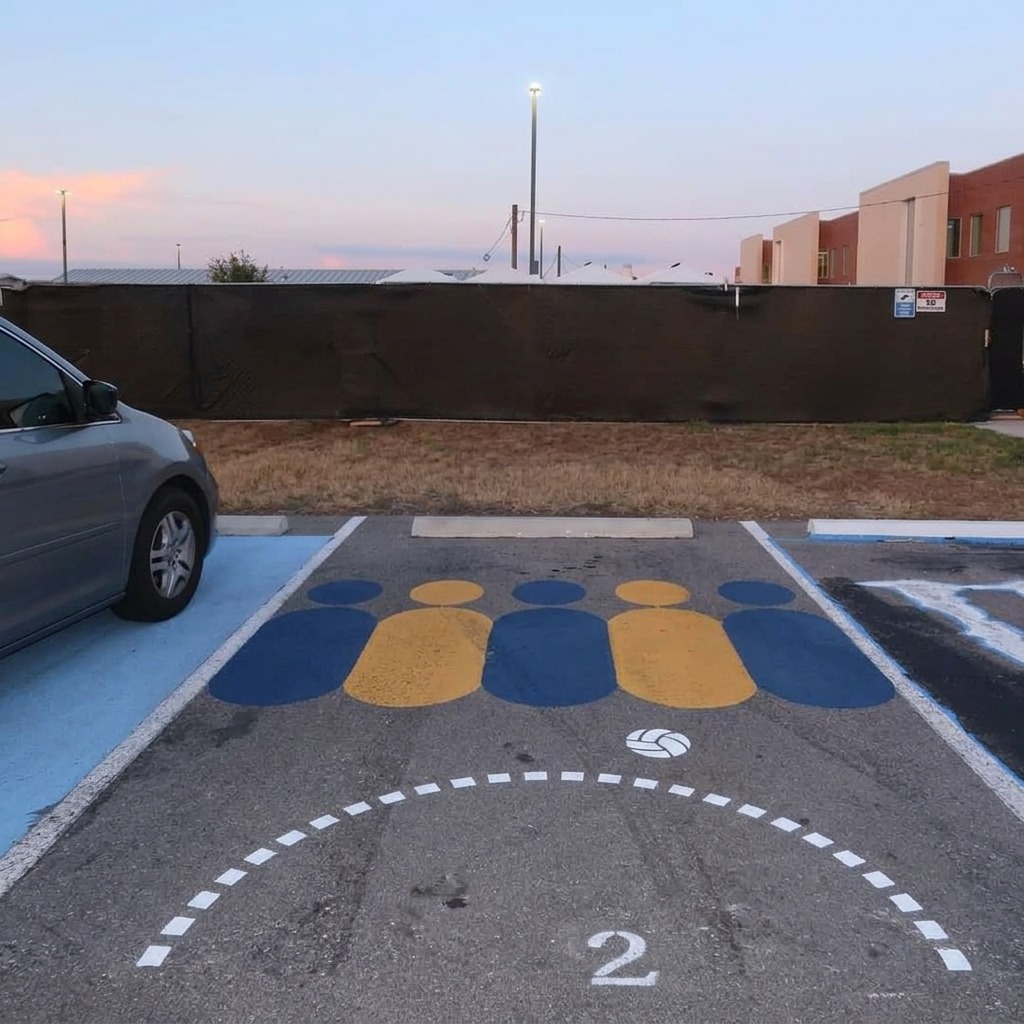
This idea recreates that tense pause right before a free kick, when everyone in the stadium seems to hold their breath. Paint a row of standing figures using rounded rectangles side by side, sketch a dotted white arc marking the required distance, and drop a small ball just outside the wall. It is one of the more nerve wracking moments in the sport, built from nothing but basic shapes.
Materials needed: two contrasting paint colors, white paint for the arc, chalk, painter’s tape.
Beginner tip: Space the wall figures evenly and keep them roughly the same size, ideally with a tape measure on hand, so the row looks planned rather than rushed.
6. Away Day Ticket Stub
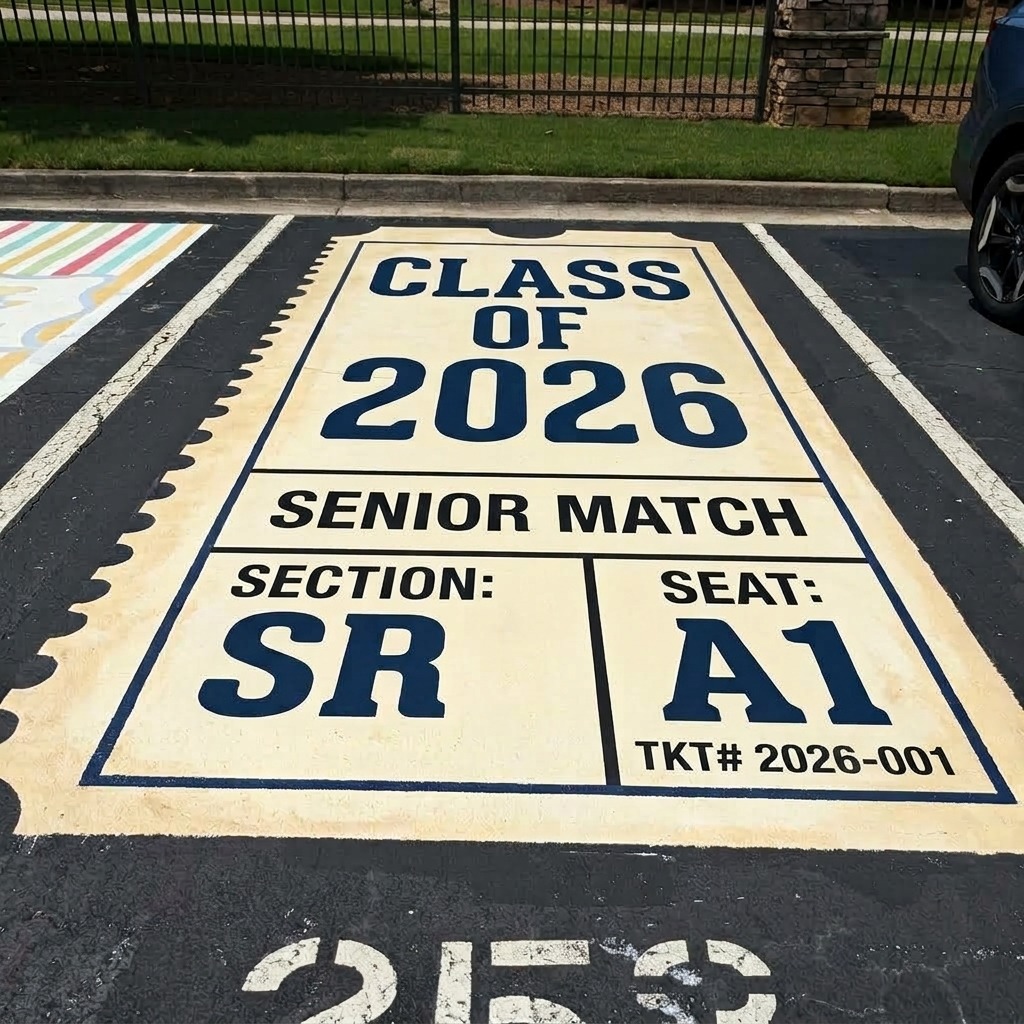
This idea turns the entire space into an oversized match ticket, complete with a perforated edge, a fake seat number, and your graduation year printed where the match date would normally sit. It is a small detail any fan would recognize, and it has not been overdone the way some other designs have.
Materials needed: one background color, black paint for text, letter and number stencils, chalk.
Beginner tip: Paint small triangle notches along one edge to fake the torn perforation real tickets have. It is a tiny touch, but it makes the design feel more clever than it actually took to make.
7. Football Net Close-Up
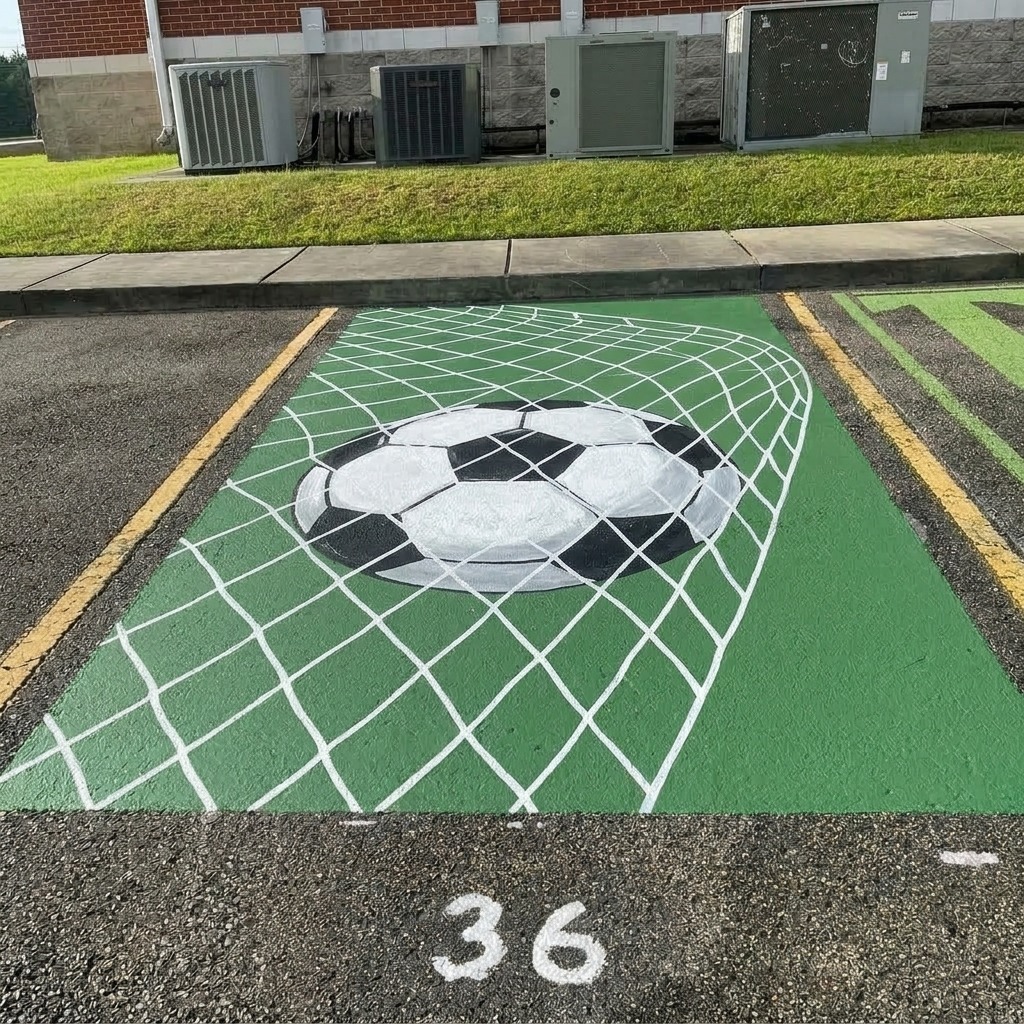
Instead of a full goal, this design zooms in on just the netting, painted as a crisscross grid in white against a green or navy background, with a ball caught mid net in one corner as if just scored. The grid pattern ends up looking far more complicated than it actually was once taped out properly.
Materials needed: background paint, white paint, painter’s tape, one small brush for the ball.
Beginner tip: Lay long strips of tape in a diagonal crisscross pattern across the spot before painting, so the netting lines come out perfectly even without freehand guessing.
8. Captain’s Armband Design
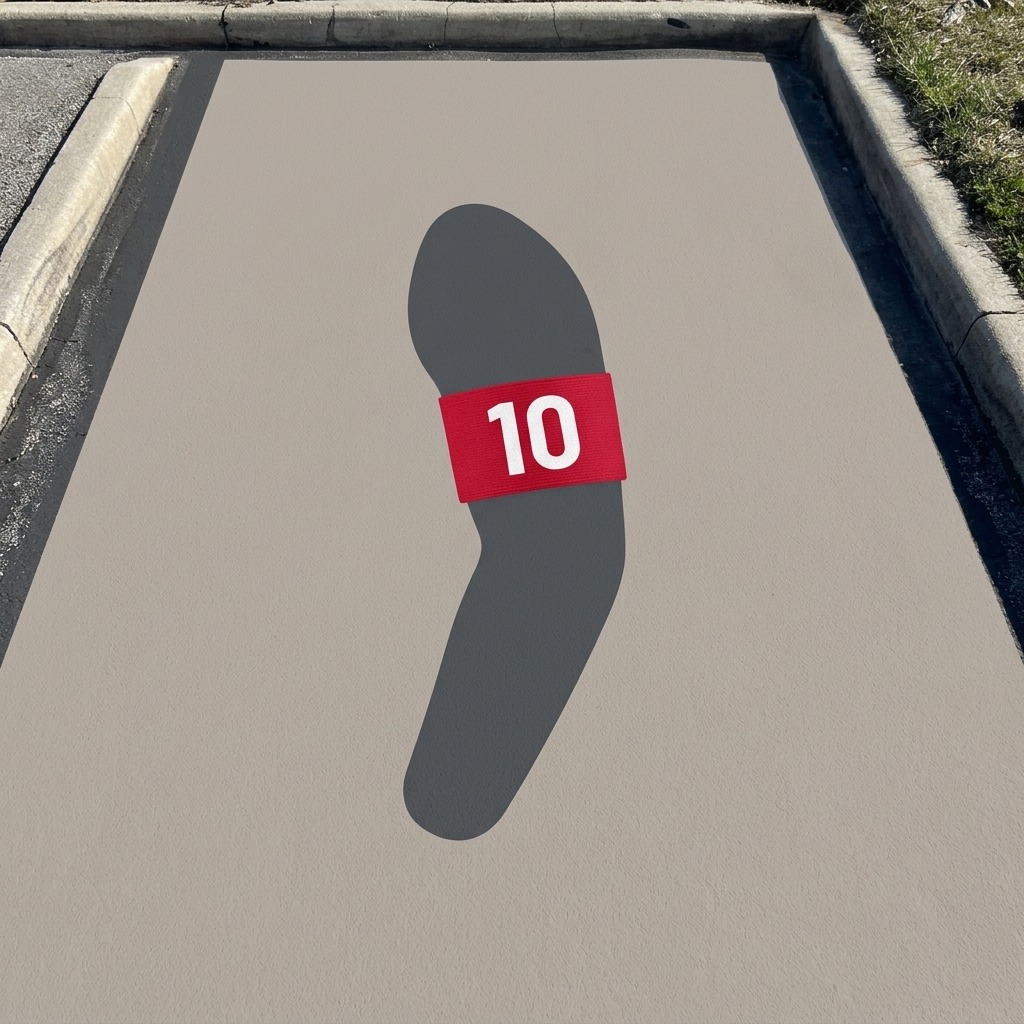
This one is centered on leadership rather than a full pitch scene. Paint a simple armband wrapped around a rounded arm silhouette, with your squad number or initials printed on the band in bold, contrasting letters. It is a quieter design that still says quite a lot.
Materials needed: skin tone or neutral paint, one bold accent color for the armband, letter stencils, chalk.
Beginner tip: Keep the arm shape simple and slightly rounded rather than anatomically accurate. The armband is the real star of this football parking spot, not the arm sitting underneath it.
9. Substitute Number Board
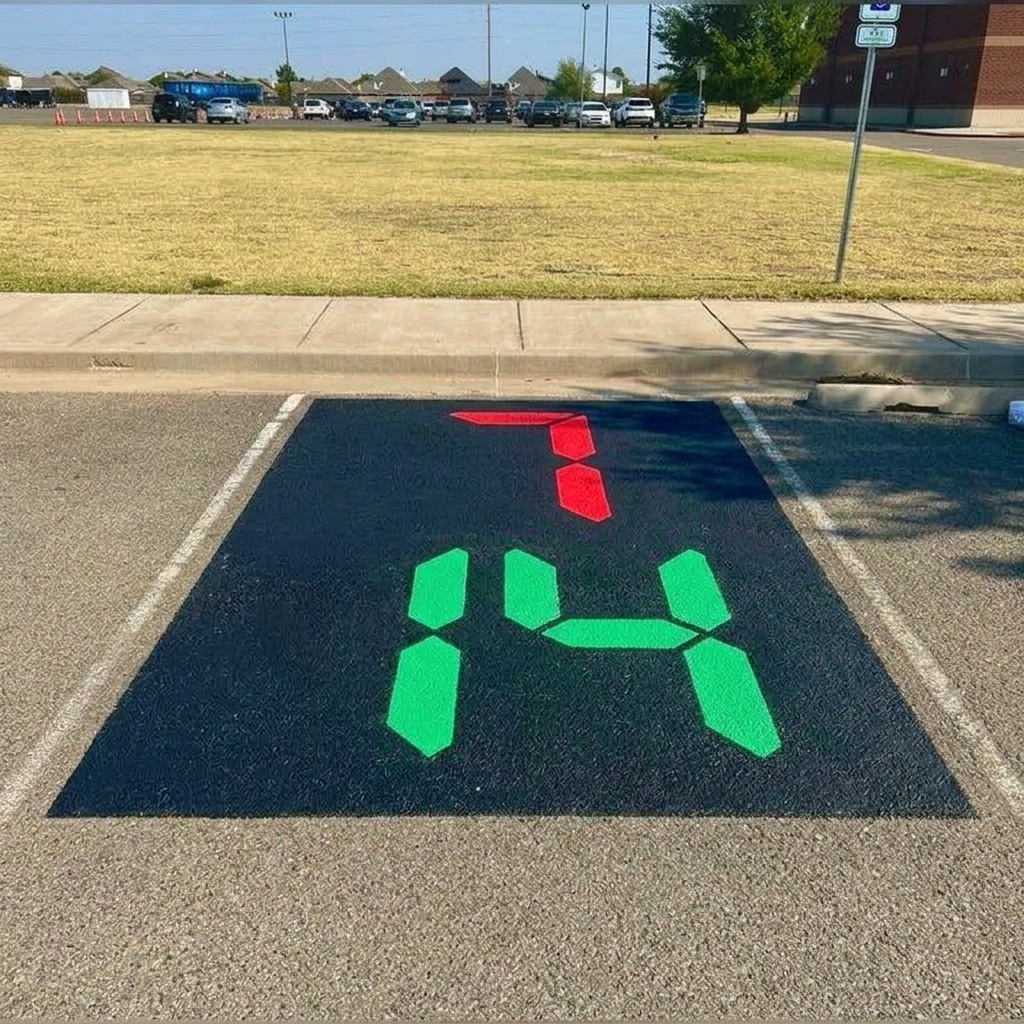
This one recreates the small handheld board referees hold up during a substitution, showing two numbers stacked on one another, one for the player coming off and one going on. Style it as your grade year going out and graduation year coming in.
Materials needed: black background paint, red and green paint for the numbers, number stencils, painter’s tape.
Beginner tip: Use stencils for both numbers so they match in size and style, since this design leans entirely on clean, readable digits.
10. Half Time Orange Slice
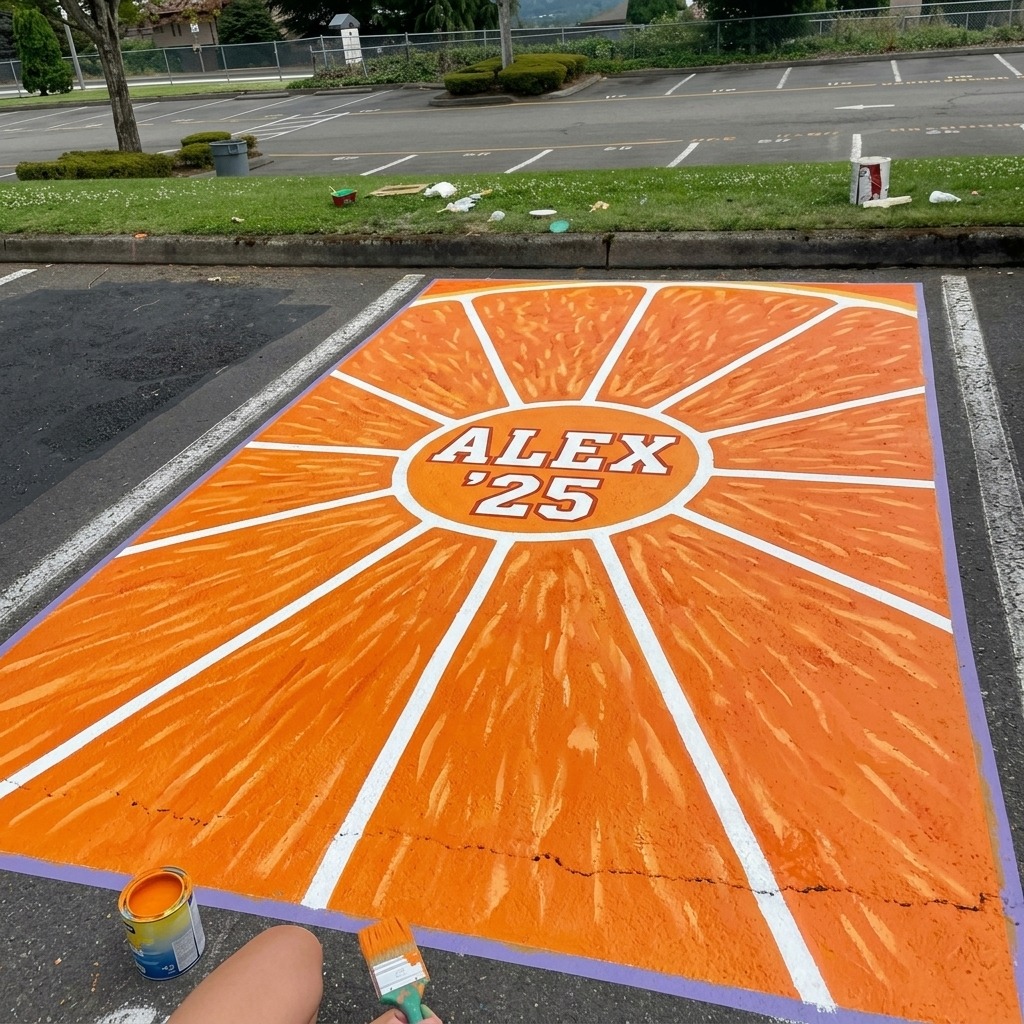
A lighter, more playful idea built around the classic half time orange slice. Paint one large circular orange slice across most of the space, complete with visible segment lines, and add your name or number in the center where the pith would be. It is colorful, simple, and different from anything pitch or kit related.
Materials needed: orange and white paint, black paint for outlines, chalk, string for tracing the circle.
Beginner tip: Use the string and chalk method to trace a perfect circle first, then divide it into segments with a ruler before painting the slice lines.
11. Chant Banner Design
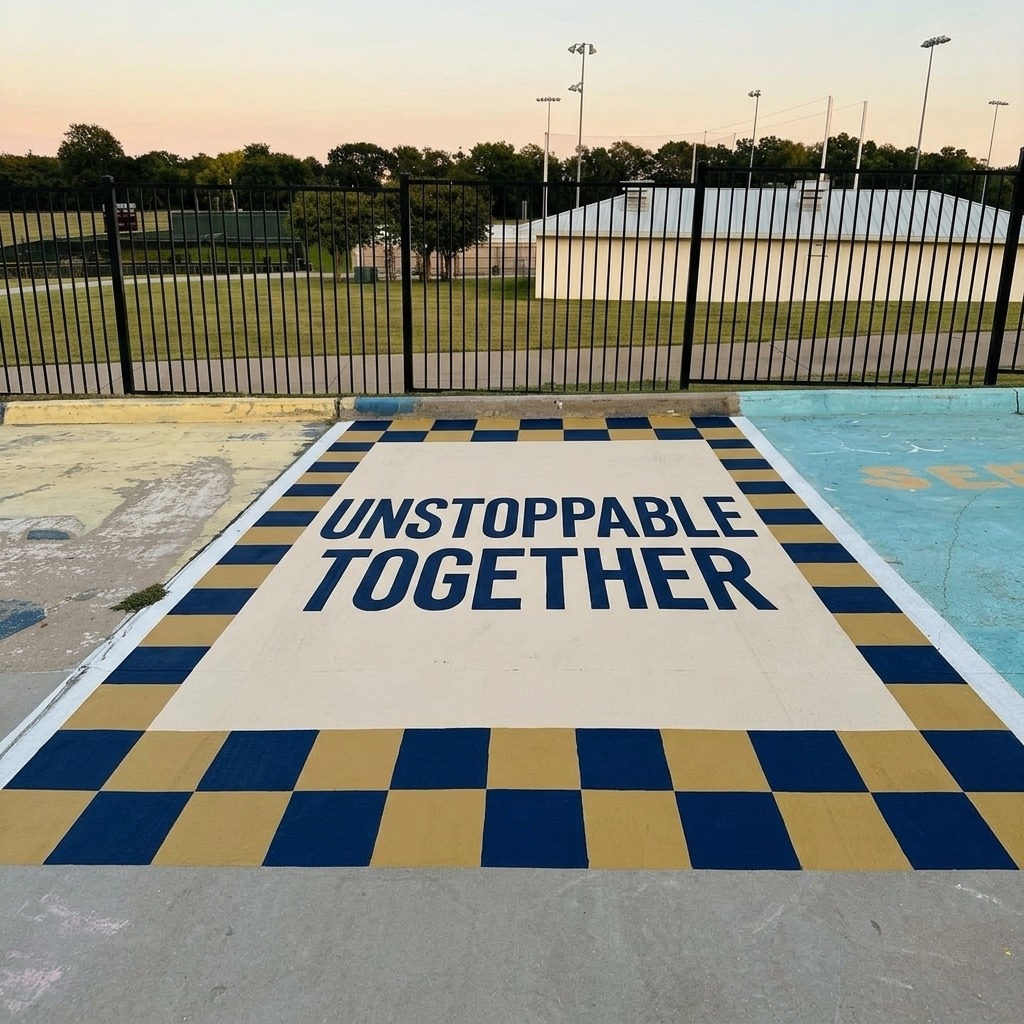
This idea borrows from terrace culture rather than the pitch itself. Paint a long banner shape across the space, with a short, punchy chant or your school’s rallying cry in bold capital letters, framed by a checkered or striped border in your school or club colors.
Materials needed: two or three paint colors, letter stencils, painter’s tape, chalk.
Beginner tip: Write your chant out on paper first and count every letter so you can space things out evenly, since crowded lettering is the fastest way to ruin this design.
How to Choose the Right Football Parking Spot Design
Picking the right football parking spot comes down to one question: what do you actually want people to notice? If you want something personal, the captain’s armband or substitute board designs work well since they lean on numbers and initials rather than imagery. If you care more about capturing match day atmosphere than the game itself, the chant banner or ticket stub ideas do that better than anything built around a ball.
Whatever you land on, keep your football parking spot down to two or three colors at most. A busy design can look great up close, but from a normal walking distance it often reads as clutter, and distance is exactly where a good football parking spot needs to hold up.
Get Your School’s Approval Before You Paint
Before any paint gets near the pavement, it is worth finding out what your school actually allows. Rules for a football parking spot vary a lot from one school to the next, and learning them after the fact usually means repainting the whole thing.
Start with a short conversation with whoever manages senior parking, usually an assistant principal or the front office. Ask about a few specific things:
- The exact size of the space and whether you can paint outside the lines
- Which paint types are approved for the lot
- Whether there is a fee, a sign-up form, or a deadline
- Whether they want to see a sketch first
That last one is worth taking seriously. Bring a simple drawing of your football parking spot design, even a rough one on notebook paper, and write down the colors you plan to use. Administrators tend to approve a sketch much faster than a vague description, and some schools restrict certain imagery or wording, so it is better to find that out early.
Get the approval in writing if you can, even if it is just an email. If someone questions your football parking spot halfway through the project, that message settles things instantly. A few minutes of asking now keeps your weekend free for the part you are actually looking forward to, which is painting.
Common Mistakes to Avoid With Your Football Parking Spot
Skipping the chalk outline is probably the most common mistake seniors make. A football parking spot that has not been sketched out first almost always ends up crooked or oddly off center once the paint goes down, and fixing that later takes far longer than sketching would have.
Painting over a wet or damp surface is another one worth avoiding. If it rained the night before, or there is still morning dew on the pavement, just wait a little longer. A rushed football parking spot on damp concrete tends to peel and fade within weeks, which is rough to watch after all that effort.
And finally, do not skip the sealant. A couple of light coats of clear outdoor sealant once everything has dried protects your football parking spot from sun, rain, and daily tire traffic, and it is the difference between a design that still looks fresh in May and one faded out by October.
Final Thought
A football parking spot sounds like a small thing on paper, just a rectangle of painted concrete, but it ends up meaning a good deal more once it is finished. It is proof that you showed up, tried something a little different, and left something behind that outlasts the school year itself. You do not need to be an artist, and you do not need a complicated plan. All you really need is one of these eleven ideas, a few cans of paint, and a Saturday morning to make it happen.